
Please Hold for the Future
I wrote this. Without any help from Louis Katz.
The machines are getting smarter, the repair bills are getting bigger, and a spacecraft has developed a software problem roughly 100 million miles beyond the reach of your neighborhood IT guy. Welcome to another day in technological paradise, where every advance comes with exciting new opportunities for something to go wrong.
The Computer Is Now Qualified to Help You. Mostly.
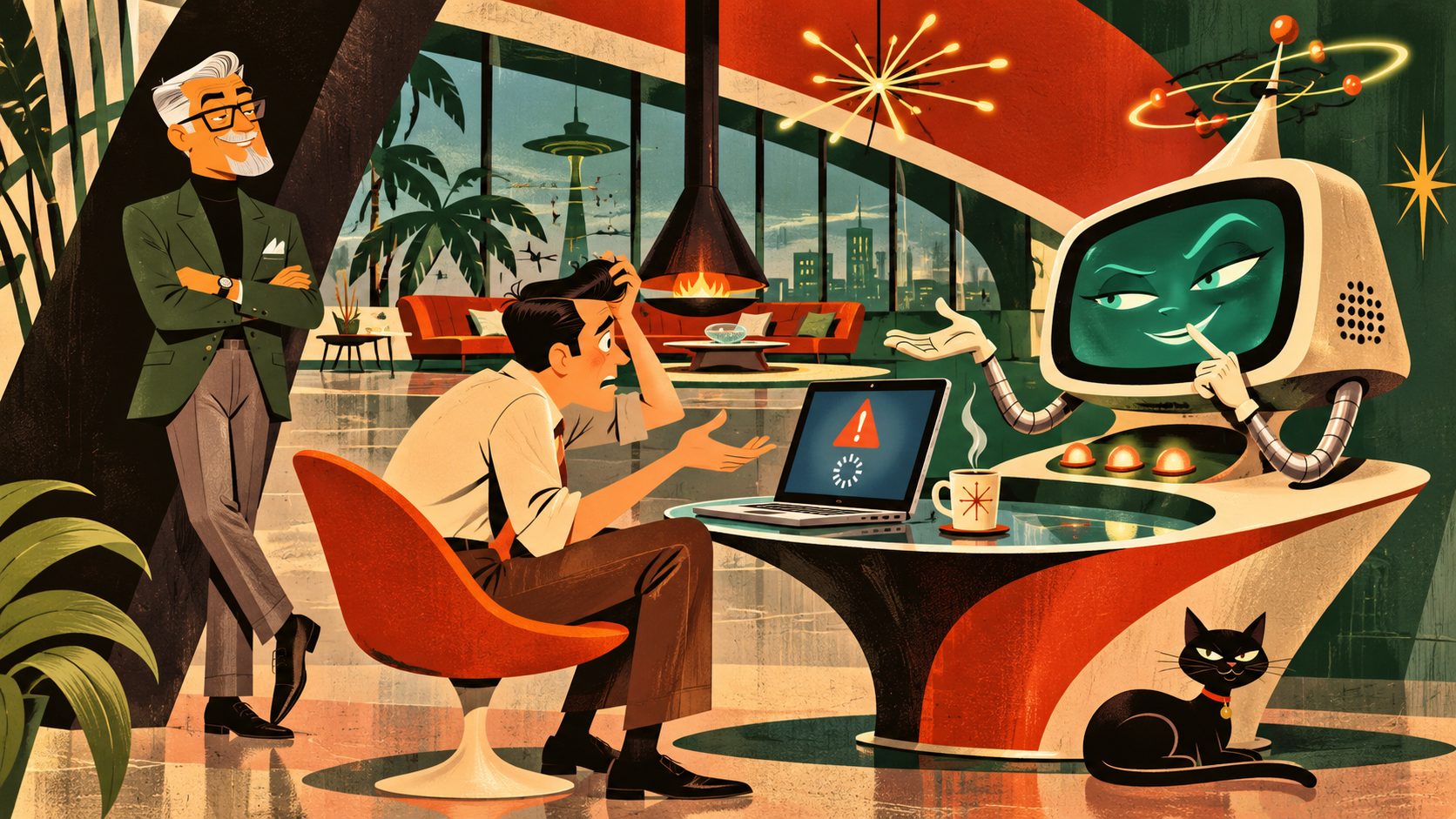
There’s a new AI-powered tech-help assistant on the ITPTSD homepage, and unlike most artificial intelligence products, it hasn’t been introduced with promises to revolutionize civilization, eliminate employment, or transform the way humanity experiences breakfast.
It’s there to help you fix your computer.
The concept is almost suspiciously straightforward. Return to the homepage, find the panel labeled “What’s Giving You Grief?”, and describe your problem in ordinary English. No account required. No subscription. No need to know what a DNS server is or why it has apparently ruined your afternoon.
The assistant will attempt to explain what’s happening, suggest something sensible to try, and tell you when the situation calls for actual human intervention.
That last part is important.
Artificial intelligence has reached the peculiar stage of development where it can write sophisticated software, interpret medical research, and discuss quantum physics, yet occasionally invents information with the serene confidence of a man explaining a subject he learned about eleven seconds ago.
Consequently, this particular assistant has been instructed to recognize its limitations. When something gets serious, it points visitors toward Louis, the human technician behind ITPTSD, who can either solve the problem or help find someone who can.
And unlike the AI, Louis has actual experience dealing with computers, their owners, and the remarkable things they do to each other.
Got a computer problem? Head back to the ITPTSD homepage, find “What’s Giving You Grief?”, and ask your question. It’s free, and you might walk away with a working computer.
If not, there’s a human being available. Sometimes the most advanced solution is someone who knows what he’s doing.
You Bought the Car. The Software Still Belongs to Somebody Else.
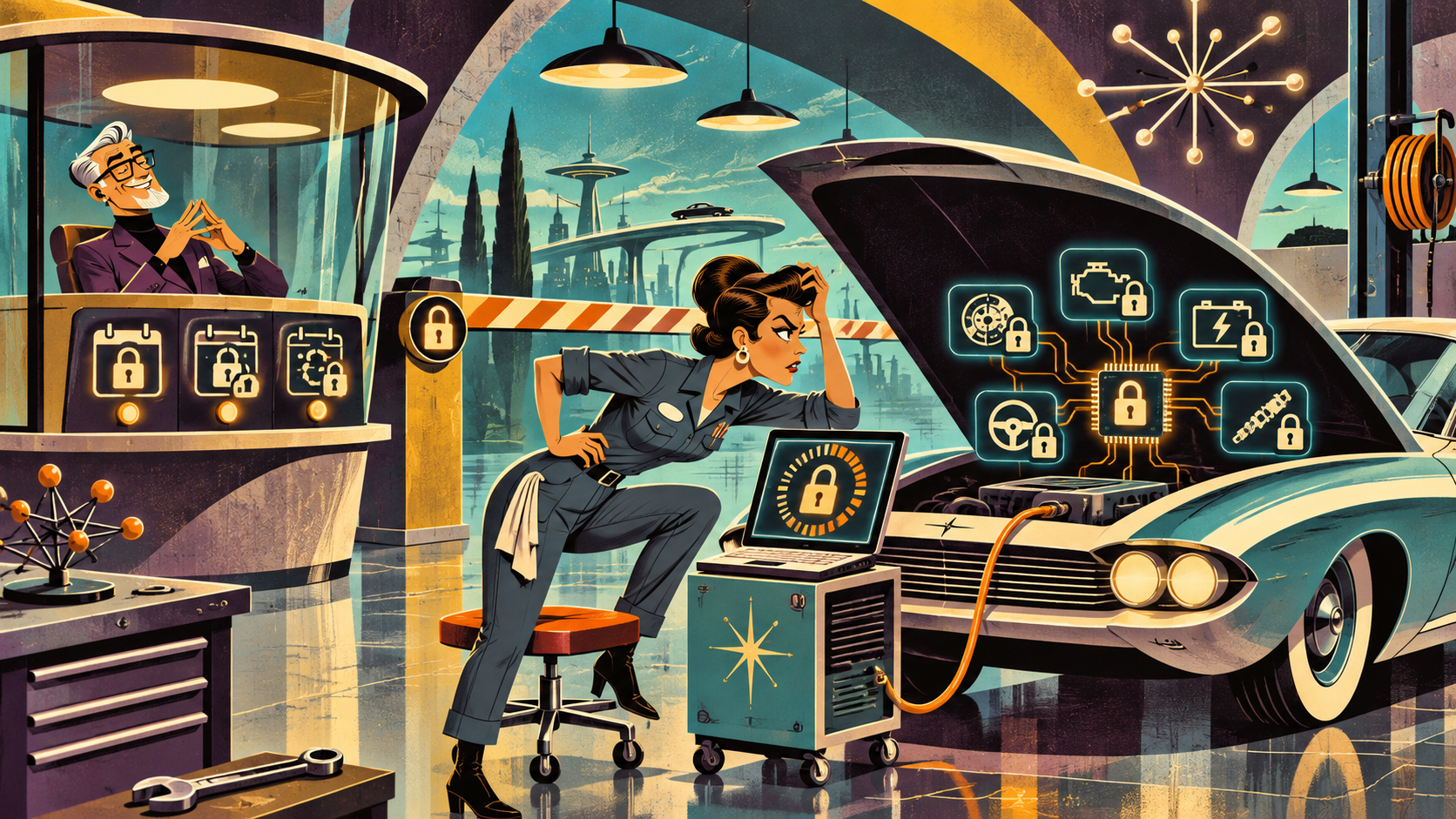
Once upon a time, repairing an automobile involved a mechanic, a collection of tools, and several expressions unsuitable for polite company.
Now it may also require a software license, a manufacturer-approved diagnostic system, an internet connection, and a recurring subscription.
According to The Register, a report from the Public Interest Research Group estimates that software restrictions and related complications are adding roughly $12 billion annually to American vehicle repair costs.
That’s a rather impressive amount of money to spend making perfectly capable mechanics ask permission to fix things.
Modern cars contain dozens of computers controlling everything from engine performance to braking systems. Diagnosing problems often requires specialized software. Accessing that software can require paying the manufacturer, sometimes repeatedly, for the privilege of servicing a vehicle the customer already purchased.
Independent repair shops face an especially unpleasant choice: buy expensive subscriptions and proprietary equipment for multiple manufacturers, or send customers to dealerships that already have access.
Naturally, somebody eventually pays for all this. That somebody is generally the person holding the car keys.
The problem extends beyond automobiles. Printers, appliances, agricultural equipment, and an expanding assortment of supposedly smart devices increasingly depend on software their owners cannot inspect, modify, or sometimes even access.
We’ve entered an extraordinary era in which you can own an object outright while renting permission to make it function.
One day your refrigerator may refuse to dispense ice until you accept a revised licensing agreement.
At which point the ice will be extra.
Mercury Is Too Far Away to Unplug.
There are few experiences more universal than watching a computer malfunction and wondering whether turning it off and back on might help.
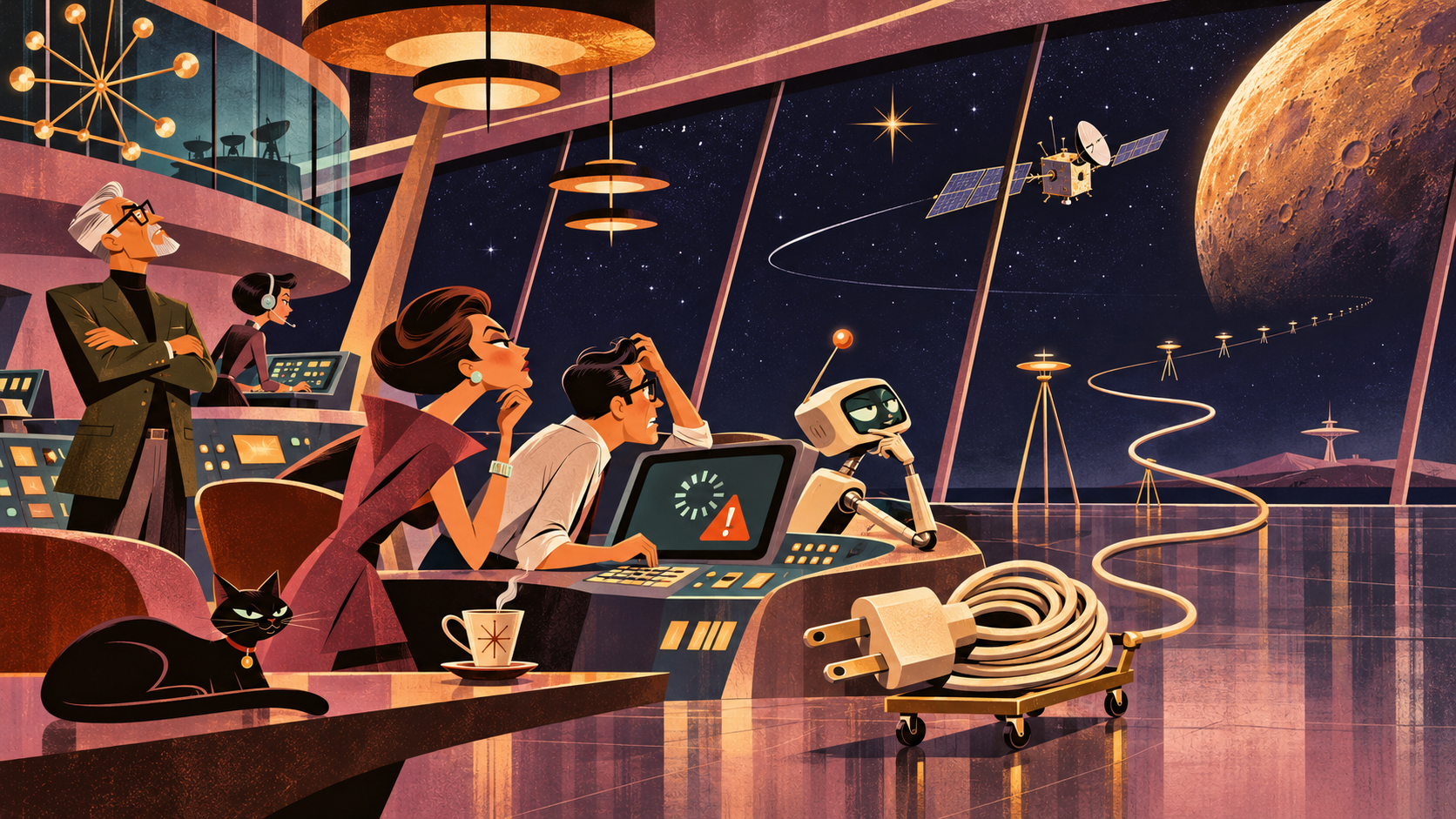
Unfortunately, that becomes considerably more complicated when the computer is orbiting Mercury.
The European Space Agency and Japan’s space agency recently achieved something remarkable: their joint BepiColombo mission reached Mercury after an extraordinarily complicated journey involving multiple planetary flybys and years of careful navigation.
Then something went wrong.
According to The Register, a software problem caused a crucial thruster burn to end earlier than planned. The spacecraft is reported safe, but engineers are investigating exactly what happened and what it means for the mission.
Consider the scale of this achievement.
Scientists designed a spacecraft capable of surviving an environment where sunlight is roughly ten times more intense than on Earth. They calculated a trajectory involving encounters with Earth, Venus, and Mercury. They coordinated systems across international space agencies and guided the machinery through years of interplanetary travel.
And then software happened.
It’s comforting, in a strange way, to know that the same fundamental frustrations experienced by someone trying to connect a printer in Boise can also afflict some of the finest engineers on the planet.
The difference is that when your printer stops working, someone can usually reach behind it and pull the power cord.
At Mercury, that option is somewhat less convenient.
There is no local repair shop, no emergency service call, and absolutely no chance of getting a technician out there before lunch.
For now, the engineers will do what excellent technicians everywhere do: examine the evidence, isolate the problem, and resist the temptation to start pushing buttons.
Because in space, nobody can hear you ask whether they’ve tried restarting it.
Get The Daily Haywire by Email
Receive new editions plus a short human note from Louis in Boise. Zero spam, one-click unsubscribe.