
Sunday, October 25, 2026
Today, scientists have discovered snakes that roll faster than they slither, somebody has invented a video game that only one person can play, and researchers are developing clothing that may eventually require technical support. Meanwhile, a robot is taking vacation pictures on Mars, and two Golden Retrievers have devoted themselves to a problem that would probably be easier to solve if they weren’t Golden Retrievers.
It’s reassuring to know that while technology keeps advancing, some things remain completely ridiculous.
Snakes Have Discovered the Wheel
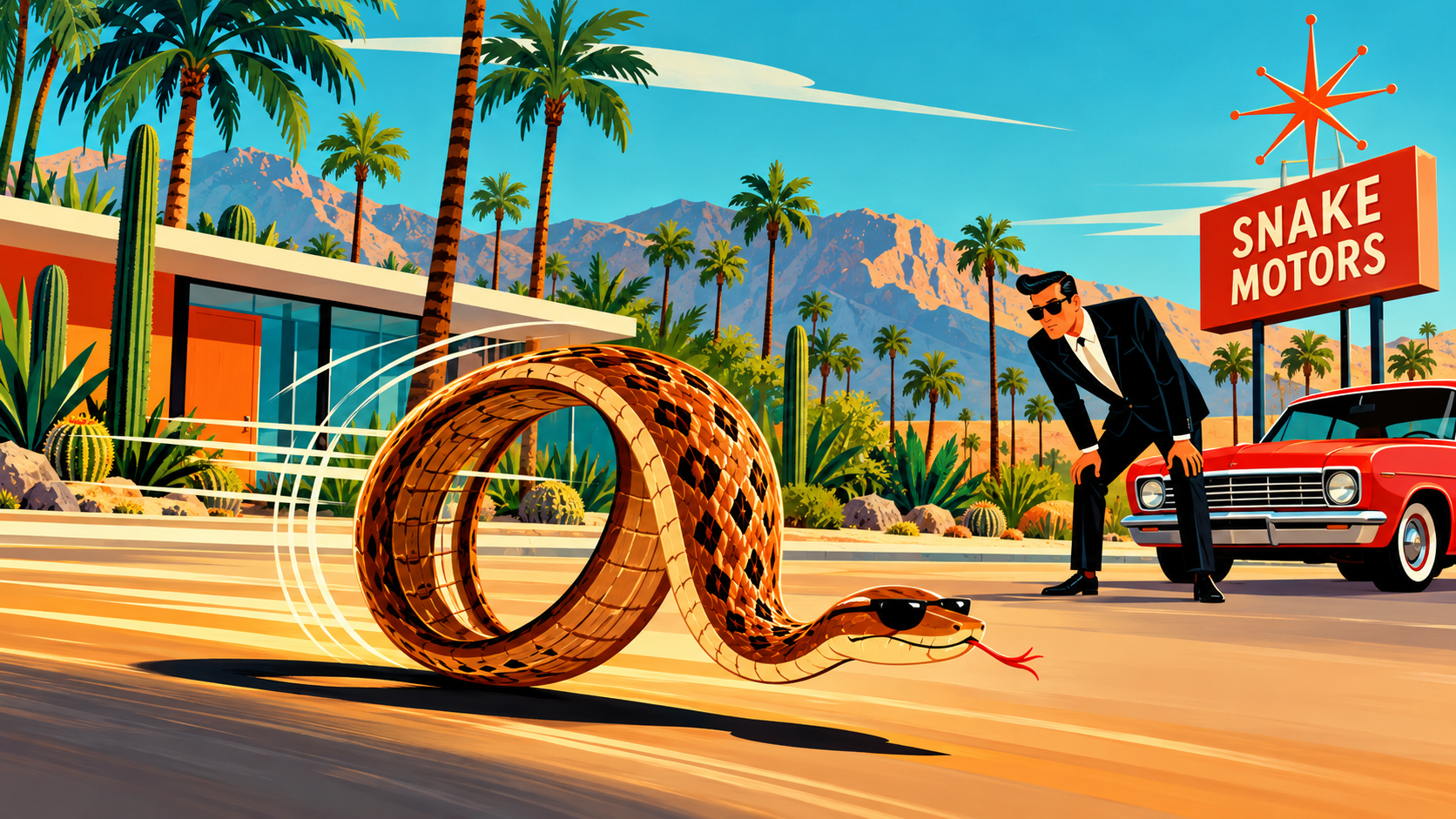
Apparently, millions of years of slithering weren’t good enough.
Scientists studying dwarf reed snakes in Southeast Asia have documented an extraordinary escape maneuver: the snakes turn themselves into something resembling a wheel and roll away from danger.
And they’re good at it. Researchers measured speeds of up to 12 feet per second, roughly four times faster than the snakes can slither.
The really clever part is that the snakes manage to keep their heads relatively steady while the rest of their bodies rotate. It’s a feat of coordination that would leave most humans vomiting beside a carnival ride.
The researchers believe the maneuver helps the snakes escape predators, although I suspect it also leaves those predators questioning what they’ve just seen.
Imagine being a hungry cobra, spotting lunch, and watching it turn into a tire and roll away.
Nature has spent millions of years perfecting the snake. Apparently, somebody finally suggested an upgrade.
The World’s Most Exclusive Video Game Has One Player

For decades, the video game industry has worked tirelessly to bring people together. Now somebody has developed a game that lets almost everybody watch.
It’s called Jono, and only one person in the entire world can play it at a time.
Created by Tuomas Erikoinen, a former Angry Birds artist, the free Steam game gives each player exactly 60 seconds to navigate a tiny character through a series of obstacles before handing control to the next person in line.
Everybody else watches, chats, cheers, and waits.
The game has been described as “massively single-player,” which sounds suspiciously like a contradiction until you consider that most of us have spent considerable portions of our lives watching somebody else operate a computer.
The remarkable thing is that the game has become popular precisely because almost nobody can play it.
It’s the digital equivalent of opening a restaurant with one table, one chair, and a line stretching around the block.
And unlike most online games, nobody can complain that the other players are ruining the experience.
They’re not allowed to play.
Two Golden Retrievers Have Spent Years Trying to Solve the Same Problem

Somewhere in Arizona, two Golden Retrievers named Mr. Tub and Blue have devoted a substantial portion of their lives to an undertaking of breathtaking complexity: retrieving a tennis ball from the bottom of a swimming pool.
Their methodology involves standing motionless, staring intently at the ball, occasionally submerging their faces, and apparently hoping the laws of physics will reconsider.
Sometimes they wear goggles. Sometimes they attempt a rescue. Often they simply stare.
The brothers have become internet celebrities, attracting an audience that tunes in to watch absolutely nothing happen, sometimes for an astonishingly long time.
It’s difficult to explain the appeal until you’ve watched them. Then it’s difficult to explain why you’ve watched seventeen more.
What makes the videos especially wonderful is the dogs’ absolute conviction that something important is happening. They study the submerged tennis ball with the concentration of nuclear physicists contemplating a reactor meltdown.
Except nuclear physicists generally make some progress.
In an age of artificial intelligence, autonomous vehicles, and machines capable of performing increasingly complicated tasks, there’s something reassuring about two dogs who remain utterly captivated by a tennis ball.
They may never solve the problem.
I’m not entirely sure I want them to.
Watch Mr. Tub and Blue | Meet the Golden Retriever brothers
Your Clothes Are About to Need Technical Support

As someone who spent 23 years helping people troubleshoot computers, I have mixed feelings about the latest breakthrough in wearable technology.
Researchers at the National University of Singapore have developed a touchscreen that can be woven directly into clothing.
Not a screen attached to your sleeve. An actual interactive display made from electronic fibers incorporated into the fabric.
The experimental sleeve features a 96-by-54-pixel display capable of showing graphics, playing video, responding to touch, and communicating wirelessly. The researchers have even designed it to withstand washing.
It’s impressive technology, and the potential applications extend well beyond checking your messages without reaching for your phone.
But I can already hear the support calls.
“My shirt is frozen.”
“Have you tried restarting it?”
“How?”
“Take it off and put it back on.”
And just imagine the possibilities for accidental input. You scratch your arm and order twelve pizzas. You hug somebody and accidentally transfer your banking information. Your jacket decides it needs an operating system update halfway through a wedding.
We’ve spent decades making computers smaller and more portable.
Now we’re apparently going to wear them.
I look forward to the day when somebody asks me to troubleshoot their pants.
Actually, no. I don’t.
Mars Has Some Interesting Real Estate
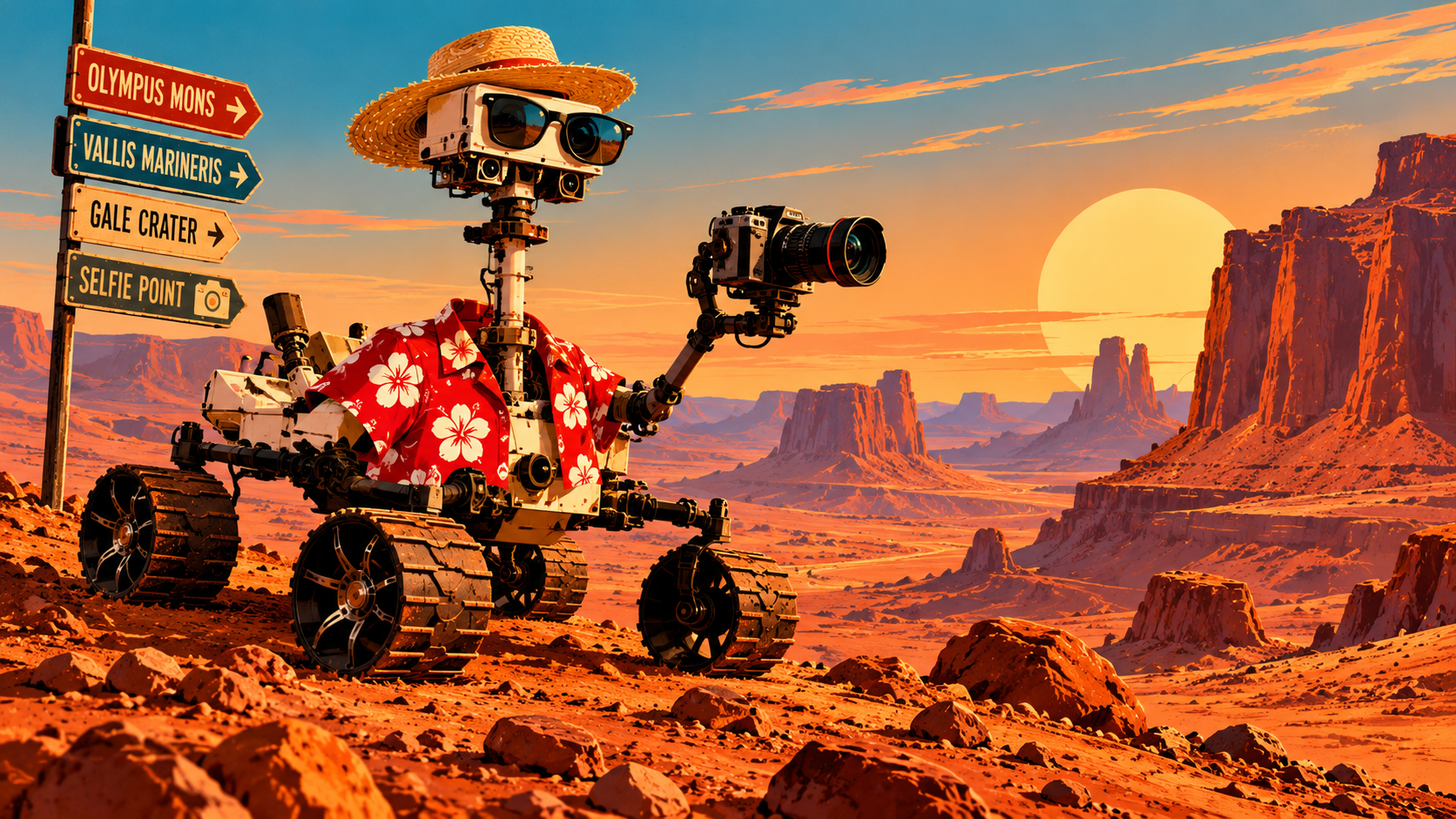
NASA’s Curiosity rover has been exploring Mars since 2012, which means it has now spent more than fourteen years wandering around a planet with no restaurants, service stations, or reasonably priced motels.
Its latest photographs are spectacular.
A newly released panorama shows dramatic wind-carved cliffs rising above the Martian landscape in the early morning light. Scientists call the formations yardangs, which sounds like something you might yell after dropping a hammer on your foot.
The images were captured in August and released this month. Researchers hope to reach the base of these formations in 2027 to learn more about how they developed.
One possibility is that the unusual rock layers originated from ancient volcanic ash deposits.
There’s something wonderful about a machine that has survived fourteen years on another planet, continuing to explore, photograph, and transmit scientific discoveries across millions of miles.
My last printer couldn’t manage fourteen months in Boise.
And Curiosity has done all this without anybody showing up to replace its toner cartridge.
Explore NASA’s Curiosity mission
Happy Birthday, Jon Anderson!

Jon Anderson, the unmistakable voice of Yes, turns 82 today.
Born October 25, 1944, Anderson helped create some of progressive rock’s most ambitious music, including Close to the Edge, Awaken, and Roundabout.
Progressive rock was a wonderful genre in which a song could last twenty minutes, the lyrics could explore the mysteries of the universe, and nobody thought to ask whether the average listener had somewhere else to be.
Anderson’s soaring vocals helped make Yes one of the defining bands of the genre.
If you haven’t listened to Roundabout lately, today’s a good day to revisit it.
And while you’re there, spend a few minutes appreciating the late Chris Squire’s bass playing.
There are bass players, and then there was Chris Squire.
Today’s Puzzle: Three Switches, Three Light Bulbs
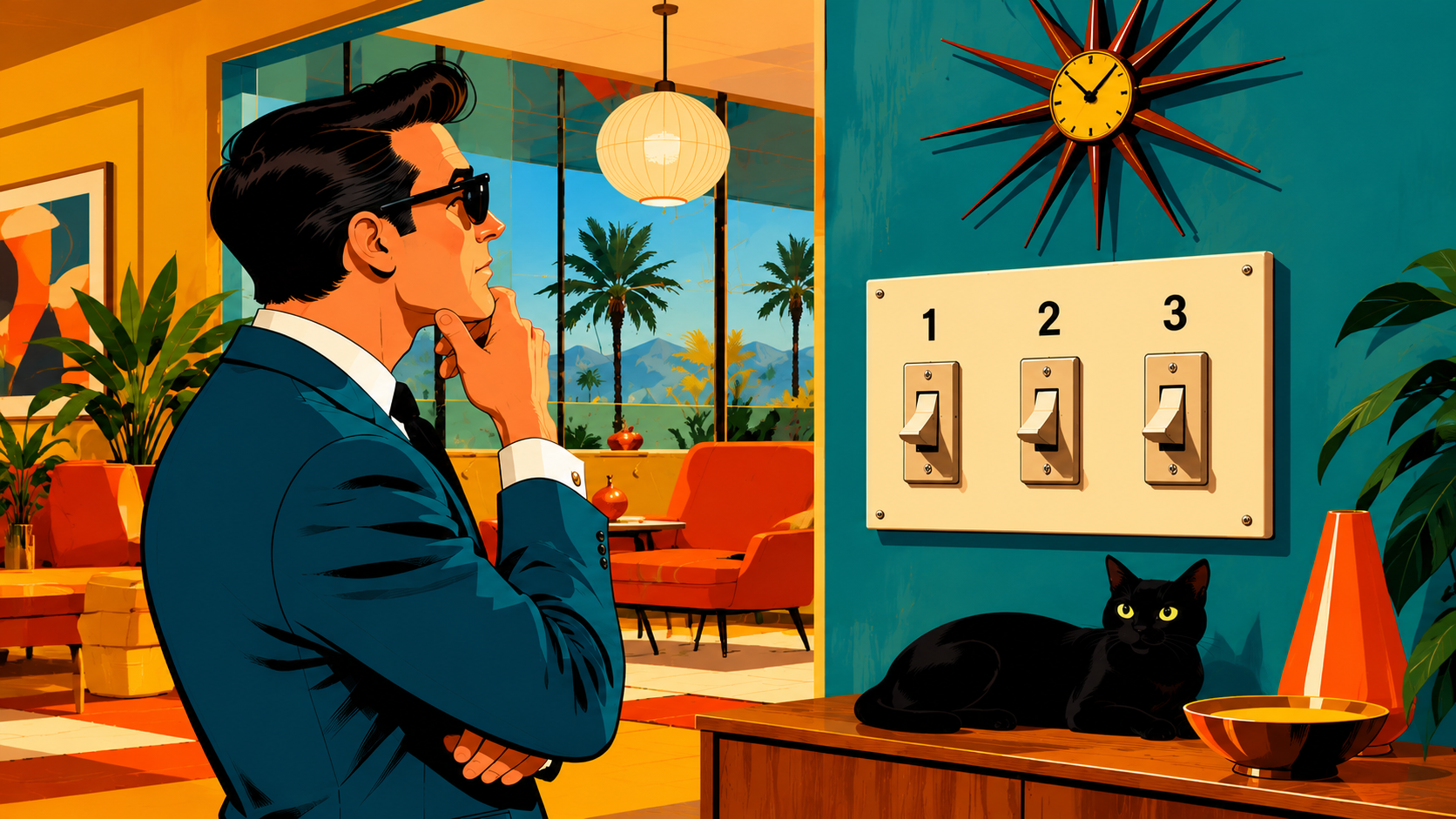
You’re standing outside a closed room containing three traditional incandescent light bulbs.
Outside the room are three switches. Each switch controls exactly one bulb.
You can operate the switches as often as you like, but you may enter the room only once.
How can you determine which switch controls which bulb?
No special equipment. No accomplices. No removing the door.
And no asking ChatGPT.
The answer appears in tomorrow’s Daily Haywire.
